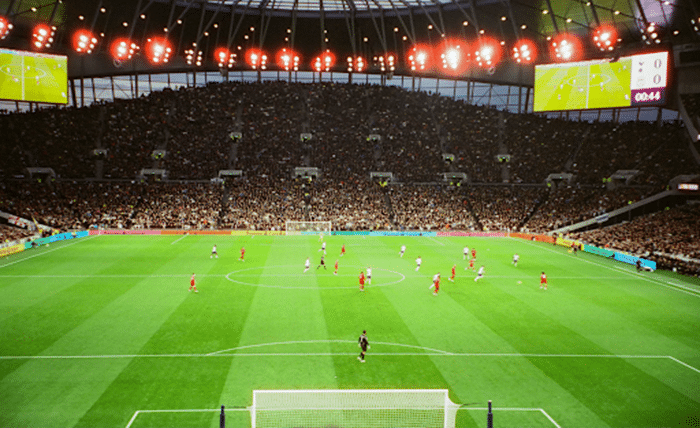
A 1 to 0 scoreline can hide almost anything. One side may have flung 25 shots at the goal and hit the post twice, while the other scored from its only real chance after a deflection. The result goes into the table, yet the story of the ninety minutes stays out of it.
Anyone who has lost a Sunday to a pub argument about a winner can check the evidence. Match centres on broadcaster apps, club sites and platforms such as sankra put shots, possession and passing maps next to the live score, so anyone can check whether a win was earned or borrowed from luck. Five of those numbers do most of the explaining.
The Stats That Describe Chance Quality
Raw shot totals mislead because a hopeful punt from 35 metres counts the same as a tap in from the six yard box. A tap in and a 30 metre punt carry different weight. Expected goals, usually written xG, gives every shot a value between 0 and 1 based on distance, angle, body part and the type of pass that set it up. A penalty sits around 0.76, a header from a corner closer to 0.08. Add them up and you get the number of goals an average team would have scored from those chances. When a side wins 2 to 0 on an xG of 0.6 to 2.1, the scoreboard is flattering the winner.
Shots on target tell a second, simpler story. Fourteen attempts with just four on frame usually means the shooters were hurried, or that a packed back line pushed every move out to the wing. The ratio often says more than the total.
Stats That Show Who Controlled the Game
Chance quality is only half the picture. An hour of ordinary passing separates those moments, and three further figures capture exactly what happened there.
| Stat | What it measures | What a high value usually suggests |
| Final third touches | Share of all touches near the rival goal | Real pressure instead of safe passing at the back |
| Passes per defensive action | Opponent passes allowed before a tackle or interception | A relaxed press that lets rivals build up |
| Big chances created | Moments where a goal was the expected outcome | A side that opens defences up again and again |
| Duels won | Share of one on one contests won on the ground and in the air | Physical control of midfield and set pieces |
Treat the table as a starting point. A team protecting a one goal lead in stoppage time will post odd numbers, so read each row with the game state in mind.
Why Possession Alone Is Not Enough
Two halves of football make the point. A team can hold 68 percent of the ball for an hour, pass sideways between its centre backs and never threaten. At the other end, the visitors stay compact, steal a loose pass and countered twice before the break. Possession in the final third separates that sterile control from the kind that squeezes a defence into its own penalty area.
Many coaches now quote the final third share to their analysts rather than the headline figure. It is harder to inflate by passing around the back.
How Pressing Numbers Reveal a Game Plan
The metric is called PPDA. Divide the passes a rival strings together by the number of tackles, fouls and interceptions the pressing team attempts, and you get one figure for how aggressively it hunts. A low value, say 8, means the team is hunting the ball high up the pitch. Anything past 15 tends to describe a team happy to sit back and let rivals pass.
Read it alongside shots conceded. Few shots conceded despite a low PPDA means the pressing is paying off. A low PPDA with many shots against means the press is being bypassed by one long pass.
Reading a Match Report Like an Analyst
My own routine is to open with xG, then check the on target count and where the touches happened. A winner that led on xG, accuracy and attacking touches probably earned the three points, whatever the keeper did. If they split, the scoreline deserves a second look, and a single match can be pure noise anyway.
Across a season the picture clears up. Over 38 league games, luck mostly evens out and the underlying numbers predict the table far better than a lucky run of narrow wins.